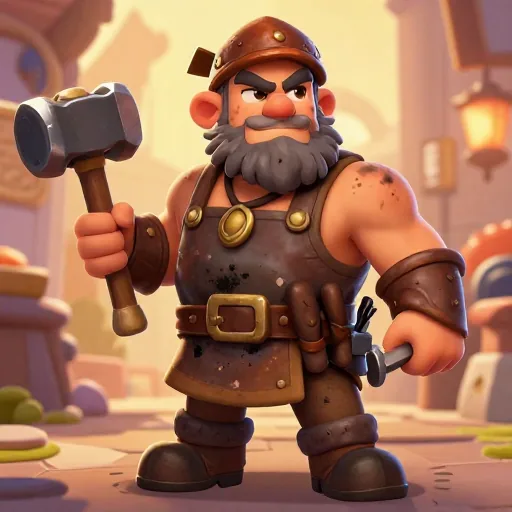
Kowal
Kuźnicza Wita Stwosza
Kowal the Blacksmith stands on the corner of ul. Kuźnicza and ul. Wita Stwosza beside the W. Kruk jewellery salon — a bronze craftsman on the very street historically dedicated to Wroclaw's metalworking trades.
Turn Your Walk Into an Adventure
Wrocław's streets are full of tiny hidden treasures. Every dwarf you discover gets added to your personal Dwarf Trail — a free collection of stamps, stories, and memories from your time in the city.
No rush — collect at your own pace.
No app download · Works on any phone
Story
Kowal the Blacksmith dwarf has lived on the corner of ul. Kuźnicza and ul. Wita Stwosza for as long as anyone can remember — which is fitting, since 'Kuźnicza' means 'Smithy Street' in Polish. In his prime, orders flooded in from across Europe: armour for knights, rings for noblewomen, clasps for travelling merchants. After decades of hammer blows, he is almost completely deaf, but he can tell by the vibration of the pavement whether a well-made shoe or a shoddy one is passing his door.
History & Significance
Kowal (the Blacksmith) stands at the corner of ul. Kuźnicza and ul. Wita Stwosza, beside the W. Kruk jewellery salon. He was sculpted by Beata Zwolańska-Hołod, one of Wroclaw's leading dwarf sculptors. The choice of location is deliberate: ul. Kuźnicza (Smithy Street) was historically the centre of Wroclaw's metalworking trades, and placing a bronze blacksmith dwarf here ties together the street's medieval past and its modern jewellery-retail present.
Inspiration
The connection between Kowal, the street name Kuźnicza, and the neighbouring jewellery shop W. Kruk is a masterclass in location-based storytelling. Kuźnicza was where Wroclaw's medieval smiths forged iron and precious metals; today a jeweller continues that tradition in gold and silver. Kowal stands as a bronze bridge between centuries, his hammer still raised even as he has long since gone deaf from the noise.
Fun Facts
- Ul. Kuźnicza means 'Smithy Street' in Polish, making Kowal the most literally named dwarf in his neighbourhood.
- He was sculpted by Beata Zwolańska-Hołod, one of the key artists behind Wroclaw's expanding dwarf collection.
- His official story says he is almost completely deaf from years of hammering — a poignant detail that makes him feel genuinely lived-in.
- The W. Kruk jewellery salon next to him continues the mediaeval tradition of precious metalwork on this very street.
- Kowal is one of the few dwarfs with a fully developed biographical backstory published on the official visitwroclaw.eu portal, including details of his legendary clientele from across Europe.
How to Find This Dwarf
From the Market Square, walk east along ul. Kuźnicza — one of the Old Town's most charming shopping streets. Kowal stands at the very first corner where Kuźnicza meets ul. Wita Stwosza, beside the W. Kruk jewellery shop. He is hard to miss: look for the dwarf with a hammer beside the gold shop window.
Nearby Dwarfs
Frequently Asked Questions
Where is the Kowal dwarf in Wroclaw?
Kowal stands at the corner of ul. Kuźnicza and ul. Wita Stwosza, beside the W. Kruk jewellery salon, in Wroclaw's Old Town.
Who sculpted Kowal?
Kowal was sculpted by Beata Zwolańska-Hołod, one of the main artists in Wroclaw's dwarf programme.
Why is Kowal placed on ul. Kuźnicza?
Kuźnicza means 'Smithy Street' in Polish — it was historically the centre of Wroclaw's metalworking trades. Placing a blacksmith dwarf here ties the street's medieval past to its present as a jewellery and shopping destination.
Does Kowal have a legend or backstory?
Yes — the official visitwroclaw.eu website gives him a rich biography: he was once the most sought-after craftsman in central Europe, known for armour, swords, and fine jewellery, but after decades of hammering he is now nearly deaf and enjoys a quieter life.
Accessibility
Wheelchair AccessibleGround LevelOutdoor
Ul. Kuźnicza has historic cobblestone paving which can be uneven. The area directly around the dwarf is generally flat and accessible, but pushchairs and wheelchairs may find the cobblestones slightly challenging.
300+ Dwarfs.
One City. Your Trail.
They're hiding on street corners, under bridges, perched on windowsills, crouching by fountains. Every dwarf you discover becomes a stamp on your Dwarf Trail — a free, personal record of your Wrocław adventure.