Saper
Obornicka 108
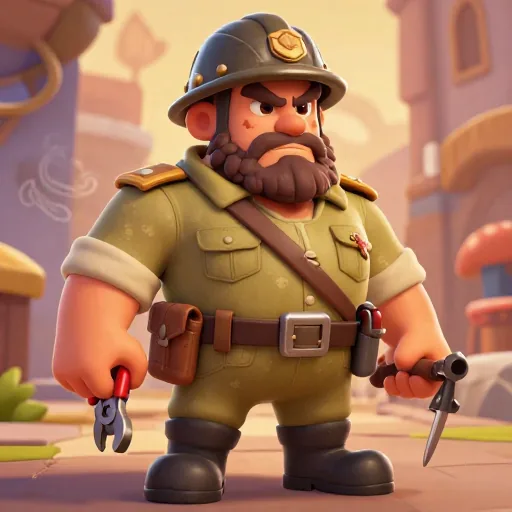
Saper is Wroclaw's military engineering dwarf, stationed at the barracks on ul. Obornicka 108 near the sapper patrol base — a bronze tribute to the Polish combat engineers who have called Wroclaw home since 1946.
Check In
Turn Your Walk Into an Adventure
Wrocław's streets are full of tiny hidden treasures. Every dwarf you discover gets added to your personal Dwarf Trail — a free collection of stamps, stories, and memories from your time in the city.
No rush — collect at your own pace.
No app download · Works on any phone
Saper
Your first check-in here always drops this card.Sign in and check in at this dwarf to collect its card.
Story
Saper is Wroclaw's bravest dwarf — a tiny combat engineer who took up his post at the military barracks on ul. Obornicka 108, right next to the sapper patrol that has been stationed there since 1946. Legend has it that Saper once single-handedly disarmed a mischievous Chochlik Odrzanski (the Oder River trickster) using nothing but a miniature wire-cutters and an impressive stare. Since that day, every sapper in Wroclaw considers him an unofficial mascot and honorary member of the corps.
History & Significance
The barracks at ul. Obornicka have been associated with Polish military engineering since 24 July 1946, when the Officers' School of Sappers was relocated there from Przemysl. Since that date Wroclaw has been the principal centre for training and developing engineering troops in Poland. The Saper dwarf was designed by Jerzy Maziarz, curator of the museum of engineering troops, and was placed at the barracks to honour this tradition. Wroclaw itself has a long history with sappers — the city's heavily bombed landscape after World War II required enormous post-war de-mining efforts, and military engineers have been active in the region ever since.
Inspiration
The dwarf was commissioned as a tribute to the Polish military engineering corps and the sapper tradition in Wroclaw. Jerzy Maziarz, the designer, drew on the proud heritage of the engineering troops stationed at ul. Obornicka and the Officers' School of Sappers. The name 'Saper' — Polish for 'sapper' or 'combat engineer' — reflects this directly, placing the dwarf firmly in the world of military service, mine-clearance, and bridge-building.
Fun Facts
- The dwarf was designed by Jerzy Maziarz, curator of the museum of military engineering troops.
- Wroclaw's sapper barracks have trained Poland's military engineers since 24 July 1946, when the Officers' School of Sappers arrived from Przemysl.
- Post-WWII Wroclaw required extensive de-mining operations; sappers are still occasionally called out to deal with unexploded WWII ordnance discovered during construction works.
- Saper is one of the very few Wroclaw dwarfs placed on a military base, making him harder for civilians to visit than most of his colleagues.
- The name 'saper' comes from the French 'sapper', meaning someone who digs trenches or undermines fortifications — a trade as old as medieval siege warfare.
How to Find This Dwarf
Saper lives at the military barracks on ul. Obornicka 108, in the Psie Pole district in the north of Wroclaw. Take tram line 3 or 11 northbound from the city centre and get off at the Obornicka stop. The barracks are on the right side of the road. Note that the grounds are a military facility, so access to the dwarf may be limited to the entrance area — check visibility from the street gate.
Nearby Dwarfs
See all Wrocław dwarfs on the dwarf list
Frequently Asked Questions
Where is the Saper dwarf in Wroclaw?
Saper stands at ul. Obornicka 108 in the Psie Pole district, at the military engineering barracks where a Polish sapper patrol is stationed. It is roughly 5 km north of the city centre.
Who designed the Saper dwarf?
The Saper dwarf was designed by Jerzy Maziarz, the curator of the museum of military engineering troops, as a tribute to the sapper corps stationed at the Obornicka barracks.
Why is there a sapper dwarf in Wroclaw?
Wroclaw has been the heart of Poland's military engineering training since 1946, when the Officers' School of Sappers moved to the city. The dwarf honours that tradition and the engineers who serve there.
Accessibility
Ground LevelOutdoor
Located within or at the entrance to a military facility. Access may be restricted. The street outside is paved and accessible, but confirm whether the dwarf is visible from the public pavement.
Check In
1000+ Dwarfs.
One City. Your Trail.
They're hiding on street corners, under bridges, perched on windowsills, crouching by fountains. Every dwarf you discover becomes a stamp on your Dwarf Trail — a free, personal record of your Wrocław adventure.